
Blog
Steering Hub Compatibility Guide

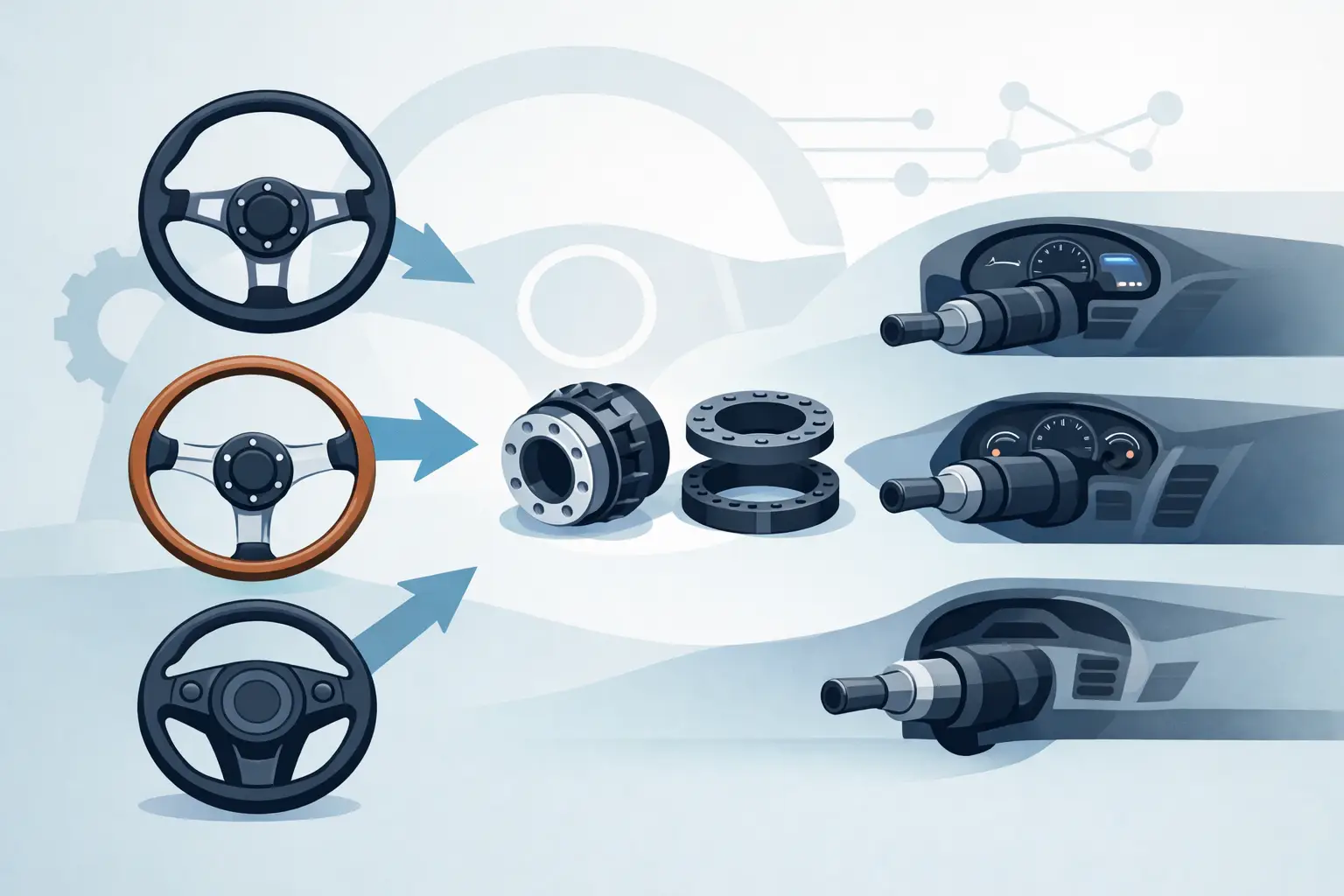
A steering wheel swap gets expensive fast when the hub is wrong. One mismatched spline, one missing cancel cam, or one bolt pattern you assumed was standard, and the install stops on the bench. This steering hub compatibility guide is built to help you get it right the first time, whether you’re fitting a street car, track build, or period-correct interior upgrade.
What a steering hub actually has to match
A steering hub, also called a boss kit on many import and motorsport applications, sits between the steering column and the steering wheel. Its job sounds simple, but compatibility is more than just whether it physically slides onto the column.
The hub has to match the vehicle’s steering shaft spline count and diameter, the depth needed for proper wheel position, and the wheel-side bolt pattern. It may also need to retain turn signal canceling, horn function, and in some cases proper spacing around the column shroud. If you are adding a quick release, that introduces another layer because the hub must work with both the vehicle and the release mechanism.
That is why fitment is rarely universal, even when two hubs look nearly identical in photos. Similar shape does not mean identical internal machining.
Steering hub compatibility guide: start with the vehicle, not the wheel
The most common mistake is shopping by steering wheel brand first. The better starting point is the exact vehicle.
Year, make, model, and chassis matter. Sometimes trim matters too. Mid-cycle changes are common, especially on older Japanese and European cars. One generation may use a different spline or different turn signal cancel design than the facelift version. Airbag-equipped variants can also complicate fitment because many aftermarket hubs are intended for off-road, racing, or retrofit use only and are not a simple plug-and-play replacement for factory safety systems.
If you’re working on a classic car, compatibility can be even less forgiving. Restored columns, swapped steering shafts, and prior owner modifications can change what should fit on paper. In those cases, visual confirmation and actual measurements are worth the extra time.
Why chassis codes matter
Enthusiasts already know this, but it is worth saying clearly: model names are often too broad. An E30, EK, S13, or NA Miata tells you more than a generic market name. Hub manufacturers commonly catalog by chassis because steering hardware follows platform engineering, not marketing language.
If you only search by model name, you can end up looking at multiple hubs that seem correct. If you search by chassis, drivetrain generation, and production year, the margin for error drops.
The wheel-side pattern is where many installs go sideways
Once the hub matches the car, the next question is whether the steering wheel matches the hub face.
Many premium aftermarket steering wheels use either a 6-bolt or 3-bolt mounting pattern, but that still does not make them interchangeable across every brand. MOMO and Sparco commonly share a 6-bolt pattern, while Nardi uses a different 6-bolt pattern on many wheels. That detail catches people off guard because both are technically six-bolt designs.
So when you see a hub listed as compatible with a specific bolt pattern, take that literally. Do not assume that any 6-bolt wheel fits any 6-bolt hub. The bolt circle diameter and hole spacing matter. If you are mixing brands, you may need an adapter ring or a different hub entirely.
Brand standards are not all the same
This is especially relevant for buyers chasing a certain look. A deep-corn wheel from one brand and a wood-rim wheel from another may both be premium pieces, but their mounting standard may differ. The right move is to confirm the wheel pattern first, then verify that the hub supports it directly or through a proper adapter.
Adapters can solve a problem, but they also add stack height. That changes wheel position, which can be good or bad depending on your driving position.
Quick release systems add convenience and complexity
A quick release can improve cockpit access, security, and motorsport function. It also creates one more interface that has to match.
Most setups follow a simple chain: vehicle-specific hub to quick release base to steering wheel. Each step needs the correct bolt pattern. If one component uses a different standard, the whole stack stops working.
You also need to think about total depth. A hub plus quick release plus dished wheel can bring the wheel much closer to the driver than expected. In a track car, that may feel ideal. In a street car with factory seating and a tall driver, it can make entry awkward and gauge visibility worse.
Horn wiring is another small detail that becomes a real detail once the parts are on the table. Some quick release systems are designed to maintain horn function cleanly. Others require extra planning or are intended more for race-focused use where that function is not the priority.
Airbag cars require extra caution
If your vehicle came with an airbag steering wheel, you cannot treat a hub swap like an old-school bolt-on. Beyond basic fitment, there are safety, legal, and electrical considerations.
Some owners are building dedicated track cars and understand exactly what they are changing. Others just want a smaller wheel and better feel on the street. Those are not the same use case. The right answer depends on the vehicle, local regulations, and how the car is used. A premium steering setup should still be a responsible one.
At minimum, know whether the hub is designed for your exact airbag-equipped application, what electronics are affected, and what additional components may be needed to manage warning lights or retained functions. Guessing here is not enthusiast behavior. It is just avoidable rework.
Hub depth changes driving position more than you think
Not every compatibility issue is about whether parts bolt together. Sometimes everything fits, but the final driving position is wrong.
Hubs come in different depths. Some are low-profile to keep the wheel close to factory position. Others push the wheel outward to improve reach, clear switches, or suit deep-dish wheel designs. Add a spacer or quick release, and small differences become obvious.
This is where use case matters. A drift or track setup often benefits from bringing the wheel closer to the driver. A street cruiser or classic restoration may need a cleaner, more restrained position. Gauge visibility, stalk access, leg clearance, and seating posture all come into play.
A technically compatible hub is not always the right hub if the geometry works against how you drive.
Turn signal cancel cams, horn buttons, and trim details still matter
These are the small parts that separate a clean install from a half-finished one.
Many hubs include a cancel cam so the turn signals self-cancel after a corner. Some do not, or they use a different design depending on application. Horn contact hardware also varies. If you want a functioning horn button in the center of the wheel, make sure the hub and wheel combination supports it correctly.
Then there is cosmetic fit. Some hubs sit neatly against the column trim. Others may leave a visible gap or require a trim ring. On a stripped track car that may not matter. On a carefully built interior, it absolutely does.
Steering hub compatibility guide: the smart way to verify fitment
The safest buying process is straightforward. Confirm the exact vehicle application first. Confirm the steering wheel bolt pattern second. Confirm whether you are using a quick release, spacer, horn button, or trim hardware third. Then check depth and intended driving position before placing the order.
If the car has unusual history, verify physical details on the column rather than relying only on generic listings. If the build mixes brands, verify every interface in the stack. Premium parts deserve premium fitment discipline.
A good fitment listing should tell you the application clearly, note the wheel pattern, and call out key functions such as horn support or cancel cam compatibility. If those details are vague, treat that as a warning sign rather than a minor inconvenience.
When universal parts make sense – and when they do not
Universal hubs and adapter solutions have a place, especially in custom builds, race cars, and sim-racing setups. They offer flexibility and can solve unusual packaging issues.
But on a street-driven vehicle or a restoration where clean fit and predictable function matter, vehicle-specific hubs are usually the stronger choice. They reduce guesswork, preserve proper alignment, and generally result in a better install. Universal solutions can work, but they ask more from the installer.
That trade-off is fine if you are building something highly custom. It is less appealing if you simply want a premium wheel mounted correctly without fabrication.
The best steering setup feels natural the moment you grab it. That only happens when the hub is treated as a fitment-critical component, not an afterthought. If you take one thing from this steering hub compatibility guide, let it be this: verify every connection point before you buy, and the rest of the cockpit comes together much easier.