
Blog
How to Install a Boss Kit the Right Way

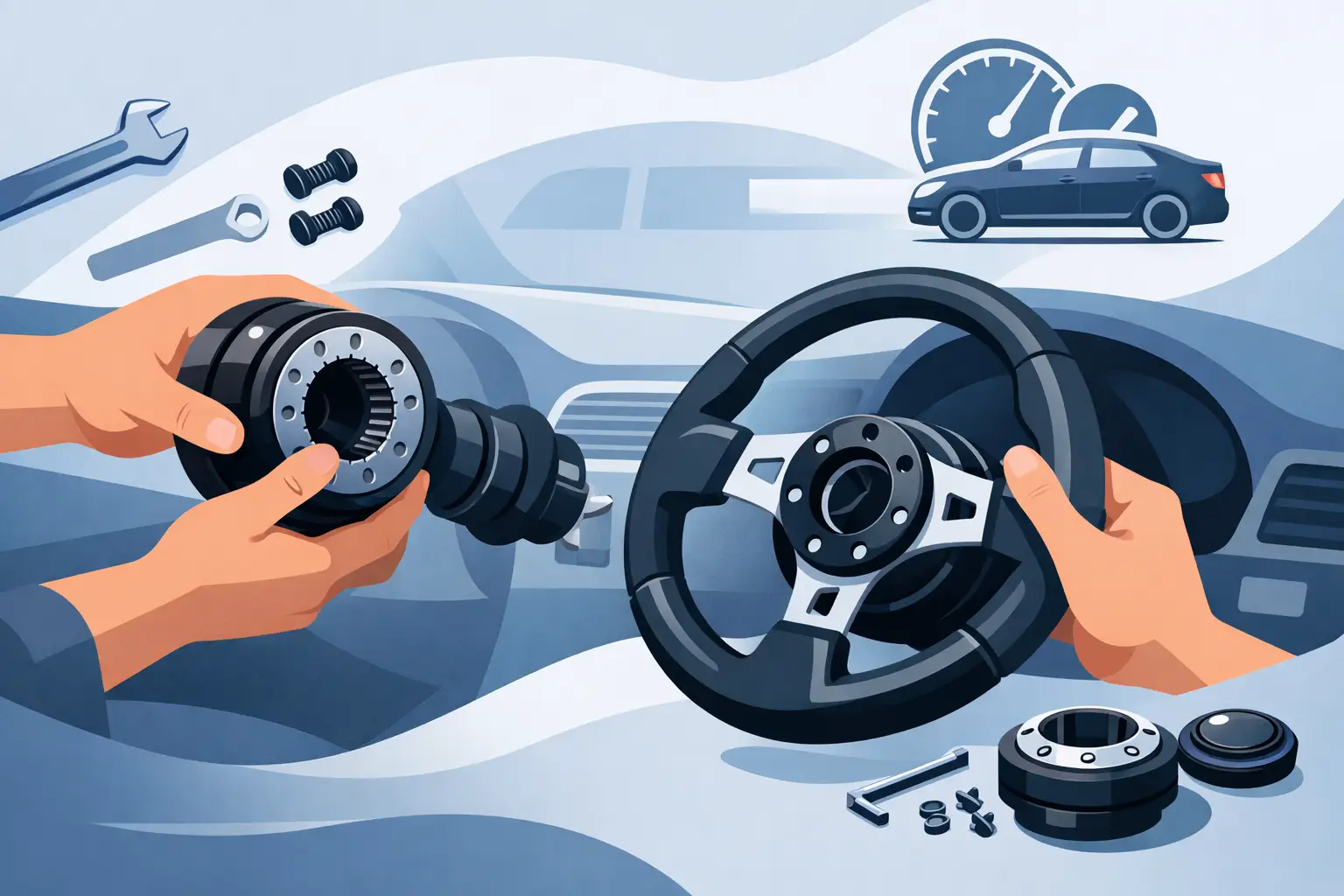
A steering wheel swap can transform the way a car feels from the driver’s seat, but the boss kit is the part that makes the whole setup work. If you’re figuring out how to install a boss kit, the job is usually straightforward when the fitment is correct, the wiring is handled properly, and you take your time with alignment. Rush it, and you end up with a crooked wheel, a non-working horn, or worse, a safety issue.
What a boss kit actually does
A boss kit, also called a hub kit or steering wheel hub adapter, connects an aftermarket steering wheel to your vehicle’s steering column. It matches the factory spline pattern and mounting depth on one side, then provides the correct bolt pattern for your new wheel on the other. On many applications, it also handles horn wiring and turn signal canceling.
That last part matters more than people think. A premium steering wheel from MOMO, Nardi, Sparco, or OMP is only as good as the hub behind it. If the boss kit is wrong for the chassis, too deep, too shallow, or missing key hardware, the install goes sideways fast.
Before you install a boss kit, confirm fitment
This is the step that saves the most frustration. Boss kits are vehicle-specific in most cases, and model year, trim, airbag configuration, and steering column changes all matter. Two cars that look nearly identical can use different hubs.
Check the exact year, make, and model, and verify whether the car originally came with an airbag wheel, cruise control buttons, or other steering wheel-mounted functions. Many aftermarket boss kits are intended for off-road, racing, or show use where factory airbags and controls are removed. That can affect legality, inspection compliance, and insurance depending on where the car is used. If the vehicle is street-driven, don’t gloss over that.
You should also confirm bolt pattern compatibility between the boss kit and steering wheel. A lot of enthusiast wheels use common 6-bolt patterns, but not all patterns are interchangeable. If you’re adding a quick release or spacer, stack height becomes part of the fitment equation too.
Tools and prep for how to install a boss kit
Most installs don’t require a full shop setup, but they do require discipline. You’ll typically need a socket set, ratchet, screwdrivers, an Allen key set, a torque wrench, electrical tape or connectors for horn wiring, and sometimes a steering wheel puller. A marker or tape helps with alignment references.
Before touching the factory wheel, disconnect the negative battery terminal. If the car has an airbag, wait the recommended amount of time before removal so any stored charge in the system can dissipate. This is not the place to improvise.
Set the front wheels perfectly straight before you start. That gives you a reference point for centering the new hub and wheel. It sounds basic, but it’s one of the easiest ways to avoid an off-center final result.
Remove the factory steering wheel carefully
The exact process varies by vehicle, but the sequence is usually similar. First remove the horn pad or airbag module according to the factory method. On some cars that means rear access screws, while others use spring clips. Disconnect the horn wire and, if equipped, the airbag connector with care.
Once the center retaining nut is exposed, loosen it but do not remove it completely right away. Leave it threaded on a few turns. Then work the wheel loose from the splines by pulling evenly from both sides. If it’s stuck, use the proper puller instead of hammering on the column. Leaving the nut partially on protects you from taking the wheel in the face when it finally breaks free.
After the wheel is loose, remove the nut fully and slide the wheel off. Pay attention to any clock spring, turn signal cancel tab, or wiring routing behind it. If your boss kit includes a cancel cam or adapter ring, this is where you’ll want to compare the old and new layouts.
How to install a boss kit without alignment issues
With the stock wheel off, compare the boss kit to the steering shaft before forcing anything into place. The splines should match cleanly, and the hub should seat correctly without persuasion. If it doesn’t fit naturally, stop there and recheck the part number. A boss kit should not need filing, grinding, or guesswork.
Route the horn wire as intended by the hub design. Some kits use a simple contact pin and ring setup, while others have a short pigtail lead. Keep the wiring clear of moving parts and avoid pinching it between the hub and column trim.
Slide the boss kit onto the shaft with the front wheels still straight. Most hubs have a master spline or alignment mark, but not all. If there isn’t one, use the marks you made before removal and center the hub as accurately as possible. Install the retaining nut and tighten it to the vehicle manufacturer’s torque specification. This is one area where feel is not enough.
If the boss kit uses a trim ring, spacer, or shroud piece, install those components in the correct sequence. Don’t overtighten decorative hardware into plastic parts. You want a secure fit, not stress cracks.
Installing the steering wheel onto the boss kit
Once the hub is secured, mount the steering wheel to the boss kit using the supplied hardware or the hardware specified by the steering wheel manufacturer. Start all bolts by hand before tightening any of them fully. That prevents cross-threading and keeps the wheel seated evenly.
If you’re using a horn button, connect the horn wire now. Most setups are simple, but polarity and grounding can still trip people up. On many aftermarket wheels, the horn button completes the circuit through the hub body, so clean metal contact matters. Too much paint, powder coat, or loose hardware can interrupt the signal.
Tighten the steering wheel bolts in a crisscross pattern so the wheel draws down evenly. Then install the horn button or center cap. If you’re adding a quick release, the process adds another layer, but the principle is the same: secure the hub first, confirm wiring, then assemble the steering wheel side with even torque and proper bolt engagement.
Test everything before driving
This is the part enthusiasts sometimes rush because the car already looks better. Don’t. Reconnect the battery and test the horn first. Turn the wheel lock to lock while stationary and make sure nothing rubs, binds, or pulls on the wiring.
Then check turn signal canceling if the vehicle uses a mechanical cancel feature through the hub. Some boss kits replicate this perfectly, while others may need a small adjustment depending on the car. If the wheel sits too close or too far from the driver, now is the time to decide whether a spacer or different hub depth is the better fix.
Take the car on a short, low-speed test drive and confirm the wheel is centered. If the steering wheel is off by a spline or two, pull it back apart and correct it at the hub. If it’s only slightly off, and the hub was clearly installed straight, the car may need an alignment rather than another wheel adjustment.
Common mistakes when installing a boss kit
The biggest mistake is buying based on appearance instead of fitment. Boss kits can look nearly identical online while being completely different where it counts. Wrong spline count, wrong depth, or missing turn signal hardware all create avoidable problems.
The second mistake is ignoring the airbag issue. Removing a factory airbag wheel is not just a styling change. It affects safety systems, legality, and warning lights. Some vehicles need resistors or additional solutions to manage the airbag circuit, but that still doesn’t make the car equivalent to stock.
The third is overtightening small wheel bolts and undertightening the center nut. People tend to baby the large hardware and lean on the small hardware. The reality should be the opposite: torque both properly, according to spec, and use quality hardware only.
When a boss kit install is not a DIY job
Some vehicles are simple, older, and purely mechanical. Others are packed with steering angle sensors, paddle shifters, audio controls, and airbag systems that don’t tolerate shortcuts. On modern cars especially, installing a boss kit can move from basic enthusiast work to a more advanced electrical and fitment project.
If the vehicle has a complicated airbag setup, if the factory wheel won’t release cleanly, or if the horn and canceling functions don’t make sense once the wheel is off, stop and verify the setup before pushing ahead. Good parts make the job easier, but the right answer is sometimes to get hands-on help from a professional installer.
A clean boss kit install should feel factory-tight, centered, and mechanically honest. When the fitment is right and the hardware is installed with care, the steering wheel stops feeling like an accessory and starts feeling like part of the car.