
Blog
Suede Versus Leather Steering Wheel

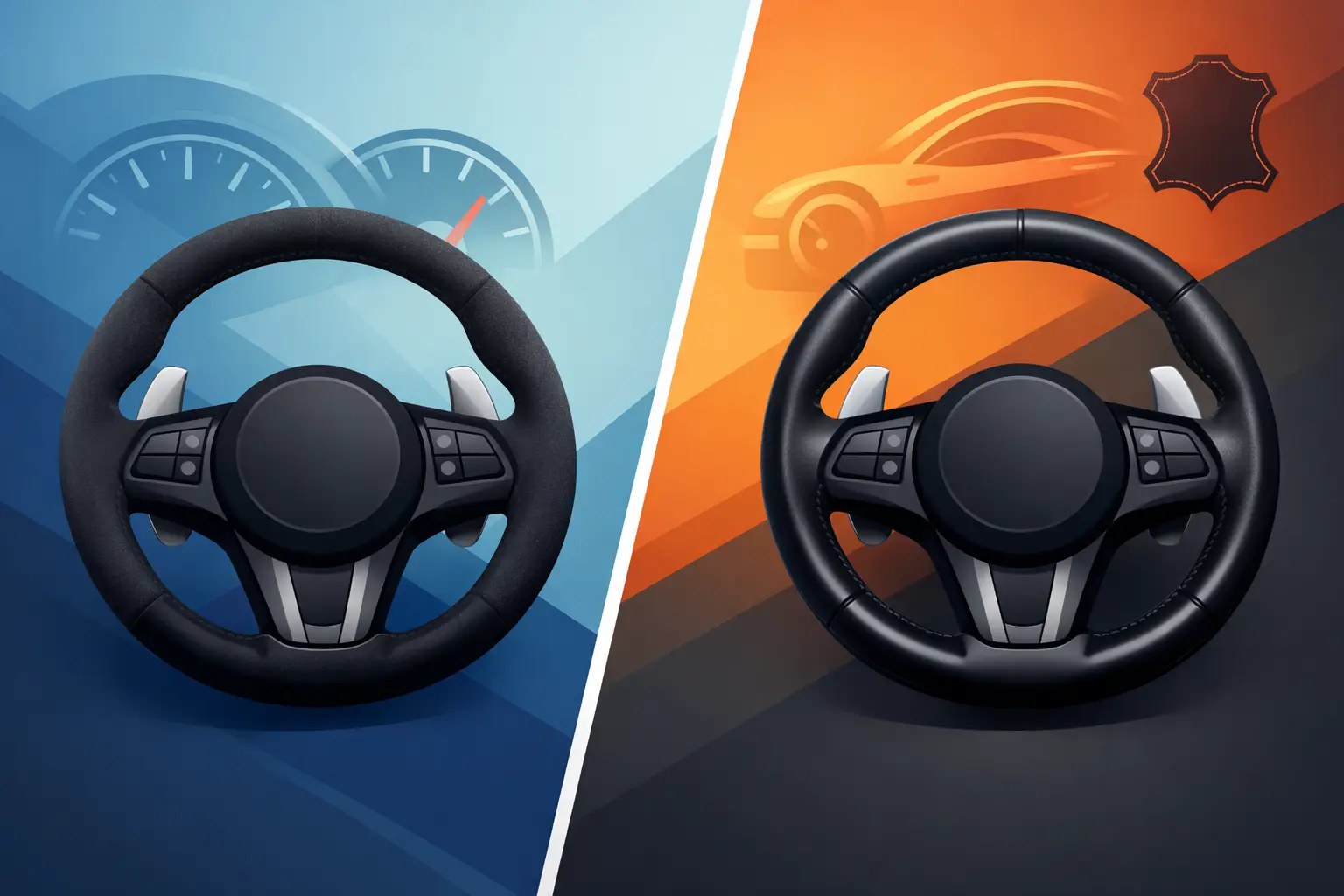
Your steering wheel is the one interior part you touch every single time you drive, so the suede versus leather steering wheel decision is not a cosmetic footnote. It changes grip, comfort, maintenance, and even how connected the car feels when you start pushing harder. If you are choosing between the two for a street build, a track car, or a sim setup, the right answer depends less on hype and more on how you actually use the wheel.
Suede versus leather steering wheel: what really changes
At a glance, suede and leather can look like two versions of the same premium upgrade. In practice, they deliver very different feedback. Suede feels softer, drier, and more aggressive in the hand. Leather feels smoother, denser, and easier to live with day after day.
That difference matters because steering input is not just about turning the car. It is about confidence. A wheel that stays planted in your hands under heat, sweat, and quick corrections creates a more precise feel. A wheel that resists wear and cleans up easily makes more sense when the car spends most of its life on public roads, in parking lots, and under normal daily use.
This is why motorsport-focused wheels from brands like MOMO, Sparco, and OMP often lean heavily into suede for track use, while leather remains a staple for street-oriented interiors and classic builds. Each material has a clear job.
Grip is where suede usually wins
If your priority is outright grip, suede has the edge. The texture creates more friction, especially when your hands are moving quickly through transitions or when you are making repeated steering corrections. On a back road or during a track session, that extra bite is noticeable.
Suede also works especially well with driving gloves. That pairing is one reason it remains a motorsport favorite. Gloves and suede together create a planted, confidence-inspiring feel that many performance drivers prefer over anything smoother.
Leather is not slippery by default, especially when it is high quality and properly textured. A good leather wheel still offers excellent control, and for most street driving it provides more than enough grip. But in direct comparison, leather generally feels more refined than aggressive. When palms get sweaty, or when you are driving hard for extended periods, it usually cannot match suede’s raw traction.
That said, grip is only part of the story. Some drivers actually prefer the easier hand movement of leather, especially on the street where constant micro-adjustment and low-speed maneuvering matter more than maximum friction.
For track cars and spirited driving
Suede makes a strong case when the car is built around performance. If the wheel is there to support driver input first and interior style second, suede is often the better fit. It feels purpose-built because it is.
For street cars and daily use
Leather is usually the more balanced choice. It still feels premium, still gives solid control, and asks far less from the owner over time.
Wear and longevity favor leather
This is where the conversation gets more practical. Suede can wear quickly if the car is used often and the wheel is handled with bare hands. Oils, sweat, sunscreen, dirt, and repeated friction all flatten the nap and change the texture. Over time, the surface can start to look glossy, matted, or uneven.
That does not mean suede is low quality. It means suede is honest about use. On a car that sees weekends, events, and focused driving, that trade-off is easy to accept. On a daily driver that racks up miles, coffee runs, and stop-and-go traffic, the material will usually show age faster than leather.
Leather is more forgiving. It resists hand oils better, wipes down more easily, and tends to maintain a cleaner appearance with less effort. A properly finished leather steering wheel can look good for years, even with regular use. For many buyers, that makes leather the smarter long-term investment.
If you care about keeping the wheel looking fresh with minimal upkeep, leather has a clear advantage.
Maintenance is not equal
A suede wheel needs more disciplined ownership. That means cleaner hands, regular brushing, and more attention to storage and cabin conditions. Some owners use gloves every time they drive specifically to preserve the wheel’s finish. If that sounds excessive, suede may not be your material.
Leather is easier. Basic cleaning and occasional conditioning usually keep it in good shape. It is a better match for the kind of owner who wants premium feel without adding another maintenance routine to the car.
There is no shame in choosing the lower-maintenance option. In fact, it is often the more informed choice. A wheel that matches your real habits will serve you better than one chosen for image alone.
Comfort depends on climate and use
Suede feels warmer and more tactile from the first touch. It can make a wheel feel more intimate and focused, especially in a stripped-down cockpit or a build with a serious motorsport theme. Many enthusiasts love suede for that exact reason. It adds character.
Leather feels smoother and often more natural over long casual drives. It slides a bit more easily in the hands, which some drivers find more comfortable in traffic or during parking maneuvers. It also tends to be less fussy across changing weather conditions.
Cabin temperature matters too. In very hot climates, leather can feel warmer to the touch after sitting in the sun, while suede may feel less harsh initially. But once you factor in sweat and daily grime, leather still tends to be easier to manage in real-world use.
Interior style matters, but it should match the car
A suede wheel immediately pushes the interior toward a motorsport look. It pairs naturally with bucket seats, harnesses, roll bars, aluminum pedals, and other track-inspired details. In the right build, it looks exactly right.
Leather is more flexible. It works in modern street cars, classics, restorations, grand touring builds, and understated performance interiors. If you want something premium without making the cabin feel race-prepped, leather usually integrates more cleanly.
This is where brand and wheel design also matter. Spoke finish, dish depth, stitching, thumb grip shape, and diameter all influence the final result. Material is only one piece of the decision, but it is the piece you will notice every time your hands hit the rim.
Suede versus leather steering wheel for different drivers
If you drive mostly on the street, park in public places, commute regularly, or just want a wheel that stays attractive with less effort, leather is the safer choice. It delivers premium feel, strong durability, and easier ownership.
If your car is a weekend machine, track car, autocross setup, or driver-focused build where grip matters more than convenience, suede earns its place. It feels more specialized because it is more specialized.
There is also a middle ground. Some enthusiasts accept suede’s higher maintenance because they value feel above everything else. Others build serious performance cars and still choose leather because they want a cleaner, longer-lasting finish. Neither approach is wrong.
Street build
Leather usually wins for practicality, longevity, and easier cleaning.
Track build
Suede usually wins for grip and motorsport feel, especially with gloves.
Show car or heritage build
It depends on the visual direction. Leather often suits classic elegance, while suede suits a more aggressive, competition-inspired theme.
Sim racing
Suede can feel excellent in a dedicated setup, but leather makes sense if multiple users handle the wheel or if low maintenance matters more.
The material is only half the purchase
A great wheel in the wrong diameter, dish, or fitment will never feel right. Before buying, think beyond suede or leather. Consider how the wheel will mount, whether you need a hub or boss kit, if a quick release is part of the setup, and how the wheel’s shape fits your driving position. Authenticity matters too, especially with premium brands where material quality and finish consistency are part of the value.
That is why serious enthusiasts tend to shop by full setup, not just by surface material. Revspeed Automotive serves that buyer well because the wheel, hardware, and cockpit details all need to work together.
Which one should you buy?
Choose suede if you want maximum grip, a motorsport-first feel, and you are willing to maintain it properly. Choose leather if you want an easier ownership experience, stronger long-term appearance, and a wheel that fits almost any street-driven build.
The better question is not which material is best in general. It is which one fits the car you built and the way you actually drive it. Pick the wheel that matches your hands, your habits, and your use case, and every drive will feel more intentional.